
Santiago Mediano, Chairman and Founding Partner of Santiago Mediano, has analysed on Radio Televisión Española (RTVE) news the legal challenges posed by sexual deepfakes. This is a form of digital violence that particularly affects women: images, videos or audio manipulated with artificial intelligence (AI) tools to show a person in erotic or sexual situations that never took place.
According to the 2024 Macro-Survey on Violence against Women, 161,038 women in Spain have had sexual images of themselves, real or manipulated, shared without their consent.
Santiago Mediano warns that the global nature of this technology makes it harder to tackle these offences: ‘The difficulty is that servers can be located anywhere, and you can practically do something from the other side of the world with effects in a third place.’
In Spain, one of the first sexual deepfake cases took place in 2023 in Almendralejo (Badajoz). A group of 13- to 15-year-olds used AI to alter real photos of around twenty schoolmates so that they appeared naked, and shared them on WhatsApp and Telegram.
Artificial intelligence is moving much faster than the law. At present, the Spanish Criminal Code does not contain a specific offence for creating sexual deepfakes.
The Organic Bill on the Protection of Minors in Digital Environments would have introduced a new Article 173 bis into the Criminal Code to criminalise sharing them without consent. However, the bill lapsed on 6 October, when the Spanish Parliament was dissolved.
The same fate befell the reform of the Law on the Civil Protection of the Rights to Honour, Privacy and Personal Image, which would have regulated the unauthorised use of AI-generated images. It will be for the next Government to take them up again.
For now, such conduct may amount to an offence against moral integrity (Article 173.1 of the Spanish Criminal Code), punishable by six months’ to two years’ imprisonment. Where sexual deepfakes involve minors, the facts may constitute a child pornography offence (Article 189 of the Criminal Code), and in the most serious cases prison sentences can reach nine years.
This is how the Almendralejo case was resolved. The Badajoz Juvenile Court found fifteen teenagers responsible for twenty child pornography offences and the same number of offences against moral integrity.
At EU level, Regulation (EU) 2024/1689 (the AI Act) applies directly in all Member States as regards prohibited practices, AI literacy and the obligations for general-purpose AI models.
Its first major amendment, the so-called AI Omnibus, Regulation (EU) 2026/1744, adds two new prohibited practices at Spain’s proposal: AI systems designed to generate realistic sexual deepfakes, and those designed to generate child pornography material.
However, these two prohibitions will only apply across the EU from 2 December, to those who place such systems on the market or use them.
Pursuing this conduct is not straightforward either. As Santiago Mediano points out in the report, the difficulty lies in the very nature of AI: identifying the perpetrator, establishing which courts have jurisdiction and getting the content taken down all become harder when the tool, the server and the victim are in different countries.
You can watch the full video of Santiago Mediano’s contribution on RTVE news.
 Susana Braz examines directors’ liability in relation to sustainability in ADVOCATUS
Susana Braz analyzes in ADVOCATUS the responsibility of managers regarding sustainability and the associated legal risks.
Santiago Mediano Legal 17/11/2026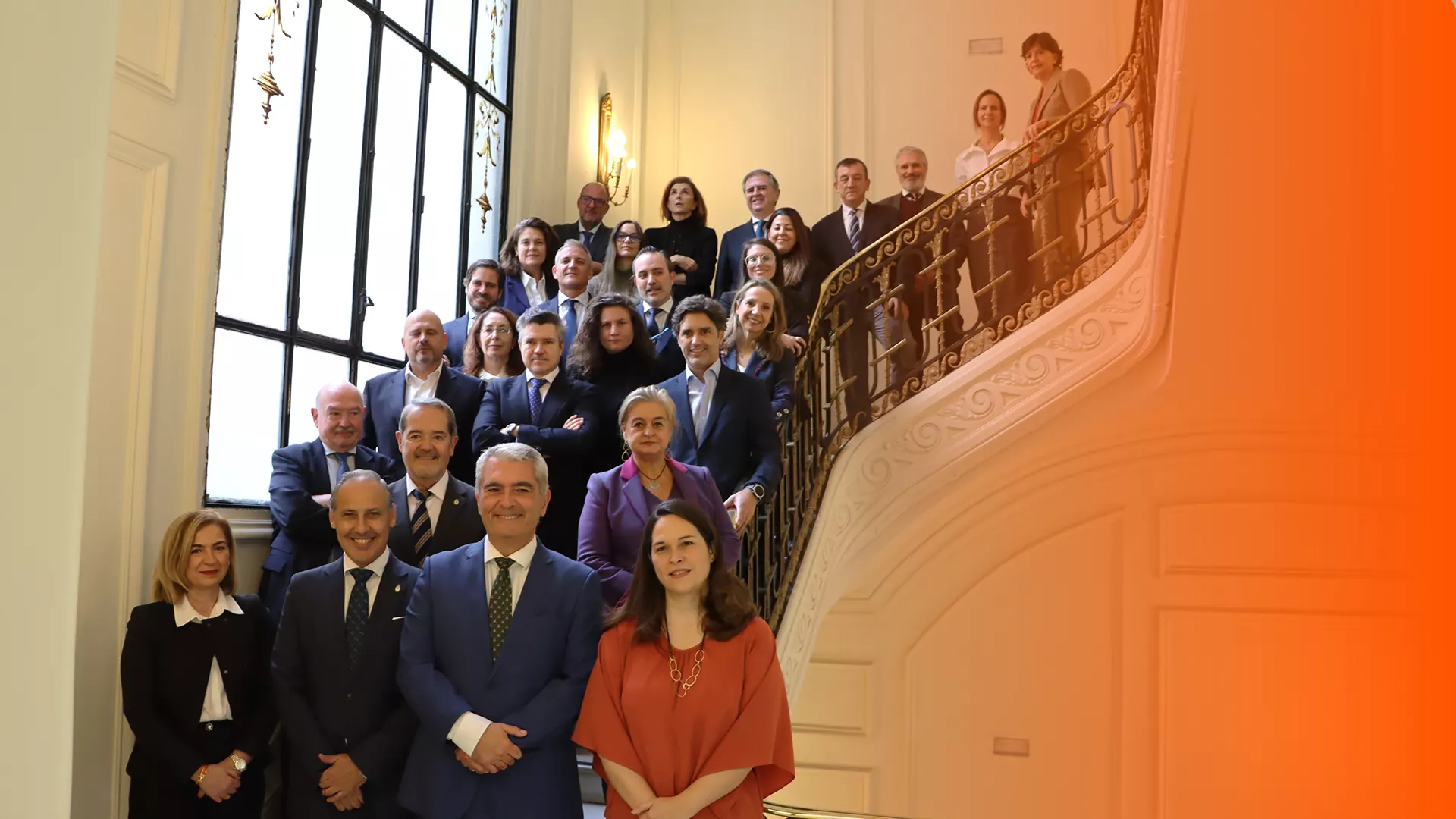 Santiago Mediano participates in ICAM Avanza to address the legal challenges of artificial intelligence and data protection
Santiago Mediano participates in ICAM AVANZA alongside the president of the AEPD to address the legal challenges posed by AI and the GDPR.
Santiago Mediano Legal 16/11/2026 The risks of software licensing for businesses: Igor Sequeira’s column for AHK Portugal
The use of enterprise software can create significant legal and financial risks when the licences purchased do not match actual usage. User changes, migrations to the cloud or third-party access can lead to breaches that, in many cases, only come to light during a vendor audit. Reviewing licensing terms and anticipating potential irregularities is therefore […]
Melisa Lizarraga 12/11/2026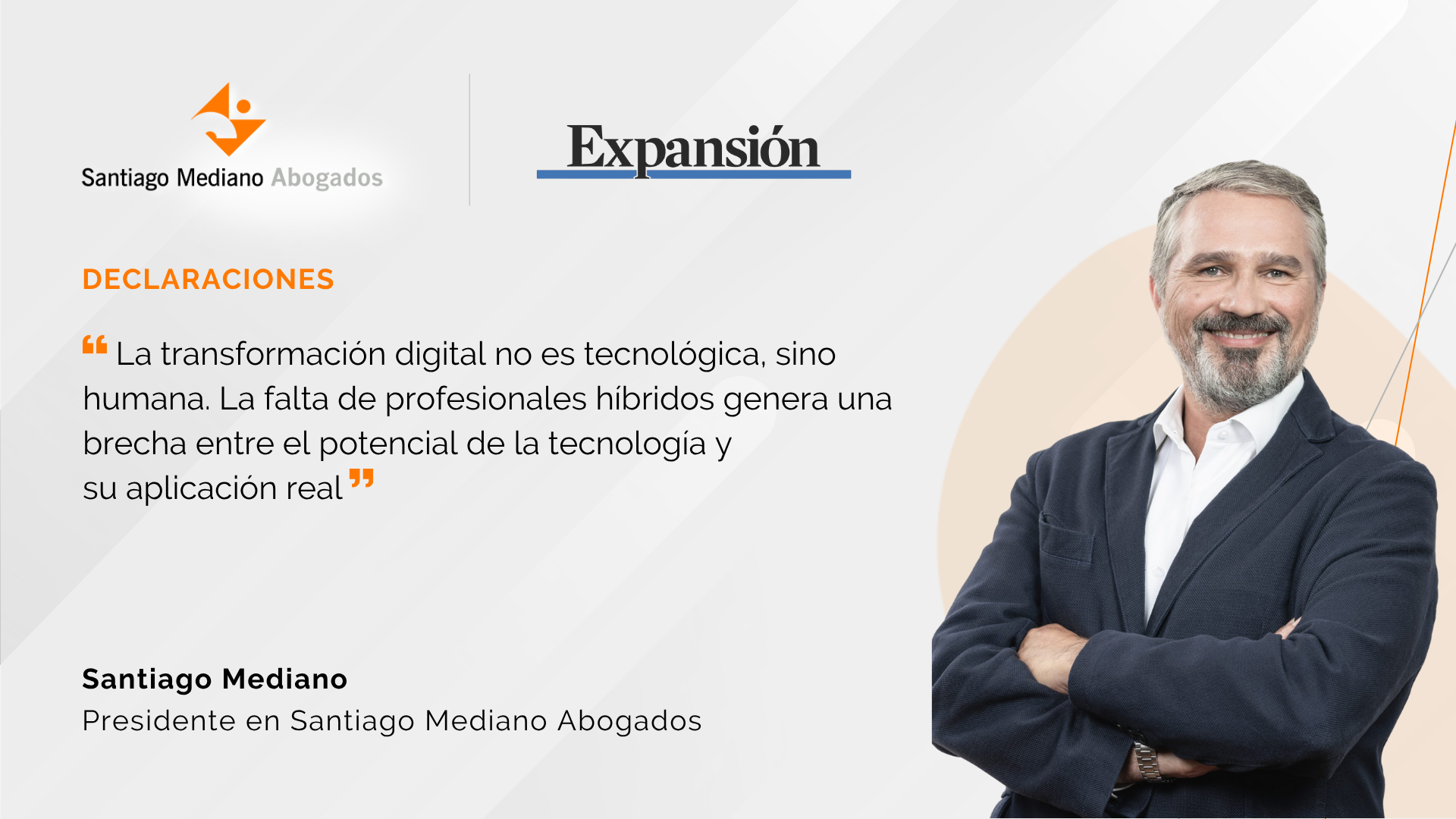 La inteligencia artificial y el reto humano de la transformación digital en el sector legal
La inteligencia artificial está transformando progresivamente el ejercicio de profesiones tradicionalmente ligadas al análisis humano, como el Derecho. Automatización de tareas, análisis predictivo, asistencia en la toma de decisiones o identificación de patrones en sentencias son ya una realidad. Herramientas como la jurimetría empiezan a formar parte del día a día en algunos despachos y departamentos jurídicos. […]
Santiago Mediano Legal 10/07/2025 El ranking consolida a Santiago Mediano Abogados como una de las firmas referentes en la abogacía de los negocios y lo sitúa entre los 15 despachos con más actividad internacional
Santiago Mediano Abogados ha sido incluido, un año más, en el ranking de Expansión, que analiza la 𝗳𝗮𝗰𝘁𝘂𝗿𝗮𝗰𝗶𝗼́𝗻 𝗱𝗲 𝗹𝗼𝘀 𝗽𝗿𝗶𝗻𝗰𝗶𝗽𝗮𝗹𝗲𝘀 𝗱𝗲𝘀𝗽𝗮𝗰𝗵𝗼𝘀 𝗻𝗮𝗰𝗶𝗼𝗻𝗮𝗹𝗲𝘀 𝗱𝘂𝗿𝗮𝗻𝘁𝗲 𝗲𝗹 𝗲𝗷𝗲𝗿𝗰𝗶𝗰𝗶𝗼 𝟮𝟬𝟮𝟰. Este ranking reafirma nuestra posición como una de las firmas de referencia en la abogacía de los negocios y nos sitúa 𝗲𝗻𝘁𝗿𝗲 𝗹𝗼𝘀 𝟭𝟱 𝗱𝗲𝘀𝗽𝗮𝗰𝗵𝗼𝘀 𝗻𝗮𝗰𝗶𝗼𝗻𝗮𝗹𝗲𝘀 𝗰𝗼𝗻 𝗺𝗮𝘆𝗼𝗿 […]
Santiago Mediano Legal 30/04/2025 Una esperanza para agilizar la justicia administrativa
Con la recién publicada Ley Orgánica 1/2025, de 2 de enero, de medidas en materia de eficiencia del Servicio Público de Justicia, el año se estrena con importantes novedades para quienes deben impugnar decisiones administrativas ante los tribunales. Una de ellas es la nueva regulación del procedimiento abreviado contencioso-administrativo que, introducido en 1998, ha terminado por convertirse […]
Santiago Mediano Legal 20/01/2025